The Beauty of Small Things
Your wonderful works are evident in creation.
They rise above the landscape, blaze with color, or stretch toward the sky. We stop to admire them because they are impossible to miss.
And then there are the small things.
The things we walk past.
The tiny flowers growing beside a path. The moss tucked into the cracks of a stone. The intricate veins of a leaf. A seed no bigger than a grain of sand, carrying within itself the promise of an entire plant.
They don't demand our attention. They invite it.
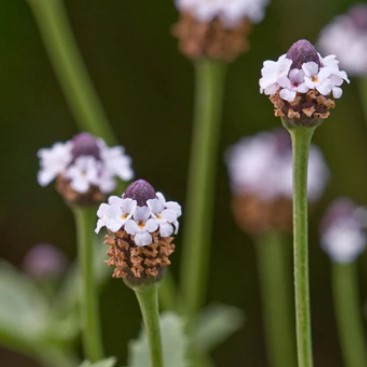
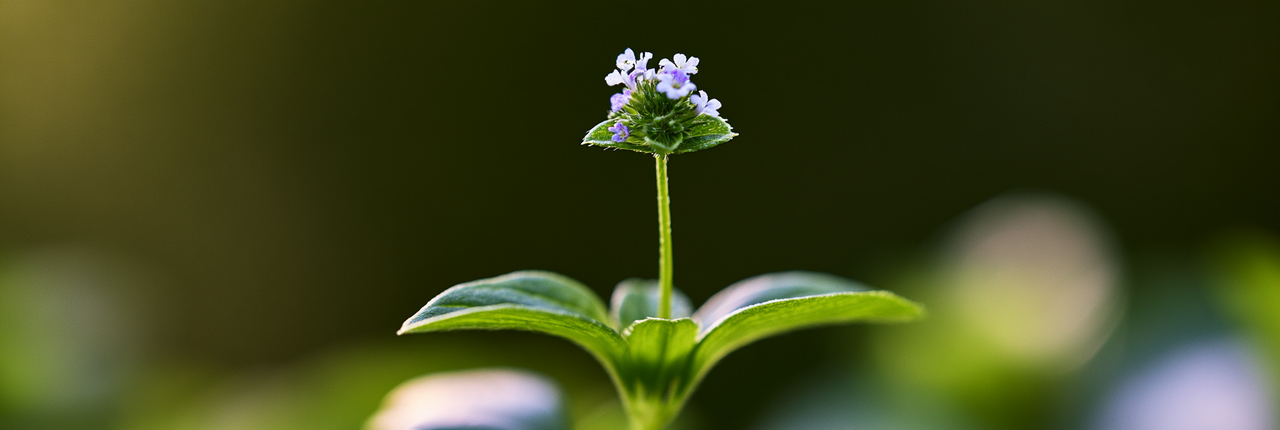
The Texas frogfruit is one of those quiet wonders.
At first glance, it is easy to overlook. Its flower heads are tiny, its stems slender, and it often grows close to the ground, mingling with the ordinary vegetation around it. Nothing about it seems designed to stop a hurried person in their tracks.
But stop.
Lean closer.
Look at it as though you have never seen a flower before.
Suddenly, the ordinary becomes extraordinary.
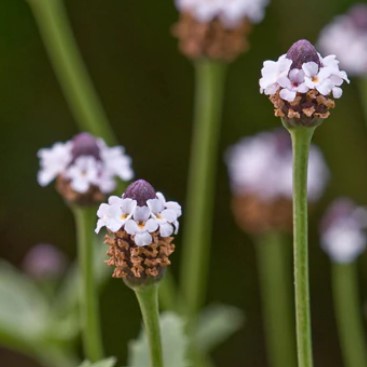
What appeared to be a simple little flower head reveals itself as a miniature constellation of petals—white and lavender blossoms arranged with almost jewel-like intricacy. Tiny forms overlap one another, each one contributing to the beauty of the whole. There are colors and textures and patterns that the casual glance completely misses.
It is a bejeweled spectacle hiding in plain sight.
And perhaps that is part of what makes small things so beautiful.
They require us to slow down.
The grandeur of a mountain can overwhelm us from a distance. The brilliance of a sunset can stop a conversation. But the beauty of a tiny flower asks something different of us. It asks us to become attentive.
To bend down.
To look again.
To discover that there is more here than we first imagined.
Creation is full of this kind of hidden magnificence. The closer we look, the more there is to see. A single flower is not merely a splash of color; it is an intricate architecture of petals, pollen, stems, shadows, and delicate relationships with the living world around it. A leaf is not merely green. A drop of water is not merely wet. Even the smallest seed contains a mystery far greater than its size suggests.
Smallness, it turns out, is no indication of insignificance.
In fact, some of the most astonishing things in creation are almost absurdly small.
We live in a world that trains our attention toward the large. Bigger achievements. Bigger houses. Bigger landscapes. Bigger experiences. Bigger lives.
But nature has another lesson for us.
Pay attention to the little things.
There is beauty in what doesn't shout.
The Texas frogfruit doesn't need to be magnificent by human standards. It doesn't need towering stems or enormous petals. It doesn't need to be rare or famous. It simply exists as what it was made to be—and when we take the time to truly see it, we discover that it is astonishing.
Maybe that's a lesson worth carrying with us.
How many beautiful things do we miss because we have decided, too quickly, that they are ordinary?
How many moments pass unnoticed because we're looking for something bigger?
How many tiny gifts surround us every day, waiting not to be found, but simply noticed?
The practice of paying attention changes the world—not because the world suddenly becomes more beautiful, but because we finally become awake to the beauty that was already there.
A tiny flower by the roadside becomes a cathedral in miniature.
A patch of sunlight becomes a painting.
A bird's song becomes a reminder that the world is still full of wonder.
And a little Texas frogfruit, easily passed by, becomes a jeweled spectacle.
Perhaps creation has always been speaking this way.
Quietly.
Patiently.
In small things.
We only have to stop long enough to look.